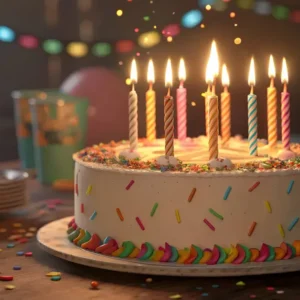
I still remember the way she hesitated at the checkout counter. The girl, no more than ten, clutched a small chocolate birthday cake in both hands, its frosting uneven and decorated with bright, plastic flowers. Her fingers trembled as she counted her coins and crumpled bills, then finally admitted in a barely audible voice that she was four dollars short.
The cashier shook her head gently, and the girl’s gaze lingered on the cake as if holding it tightly might somehow make it hers. I couldn’t just watch her disappointment, so I stepped forward and offered to pay, telling her, “Yeah. Birthdays matter.”
Her reaction broke my heart.
She hugged the cake—and then me—as if the world itself was fragile and she needed to cling to something solid. Through muffled sobs, she whispered, “It’s for my mom. She’s sick.
This will be her last birthday.” I froze, stunned by the weight of her words, and only watched as she pulled away, wiped her tears, and rushed from the store, cake in hand. I paid and followed after her slowly, the encounter already settling into my memory like something that would never leave. Halfway to my car, something in my coat pocket shifted.
Frowning, I reached inside and pulled out a small, vintage watch—my mother’s watch, the one I hadn’t seen in sixteen years. Beneath it was a photograph of a woman and a little girl outside a yellow house, worn and creased from years of being carried. On the back, in my mother’s handwriting, were the words: “Find her.
Forgive her.” Sixteen years of silence, distance, and pride that had hardened into a wall all came crashing down at once. I scanned the parking lot frantically, and there she was—still holding the cake, waiting. “Hey!
Wait!” I called, breathless, holding out the watch. Her eyes filled with tears as she softly said, “I was hoping it was you.” She showed me the notes she had kept, Saturdays spent watching and waiting for me to appear, following her mother’s instructions to find me. And then the truth landed: the four dollars short wasn’t a coincidence—it was a test, a signal, a bridge between the past and the family I had left behind.
I still remember the way she hesitated at the checkout counter. The girl, no more than ten, clutched a small chocolate birthday cake in both hands, its frosting uneven and decorated with bright, plastic flowers. Her fingers trembled as she counted her coins and crumpled bills, then finally admitted in a barely audible voice that she was four dollars short.
The cashier shook her head gently, and the girl’s gaze lingered on the cake as if holding it tightly might somehow make it hers. I couldn’t just watch her disappointment, so I stepped forward and offered to pay, telling her, “Yeah. Birthdays matter.”
Her reaction broke my heart.
She hugged the cake—and then me—as if the world itself was fragile and she needed to cling to something solid. Through muffled sobs, she whispered, “It’s for my mom. She’s sick.
This will be her last birthday.” I froze, stunned by the weight of her words, and only watched as she pulled away, wiped her tears, and rushed from the store, cake in hand. I paid and followed after her slowly, the encounter already settling into my memory like something that would never leave. Halfway to my car, something in my coat pocket shifted.
Frowning, I reached inside and pulled out a small, vintage watch—my mother’s watch, the one I hadn’t seen in sixteen years. Beneath it was a photograph of a woman and a little girl outside a yellow house, worn and creased from years of being carried. On the back, in my mother’s handwriting, were the words: “Find her.
Forgive her.” Sixteen years of silence, distance, and pride that had hardened into a wall all came crashing down at once. I scanned the parking lot frantically, and there she was—still holding the cake, waiting. “Hey!
Wait!” I called, breathless, holding out the watch. Her eyes filled with tears as she softly said, “I was hoping it was you.” She showed me the notes she had kept, Saturdays spent watching and waiting for me to appear, following her mother’s instructions to find me. And then the truth landed: the four dollars short wasn’t a coincidence—it was a test, a signal, a bridge between the past and the family I had left behind.